10 digital PR campaigns worth studying in 2026.
Theory only goes so far. These are real campaigns, real outlets, real link counts — a working reference for what actually earns coverage, not a hypothetical.
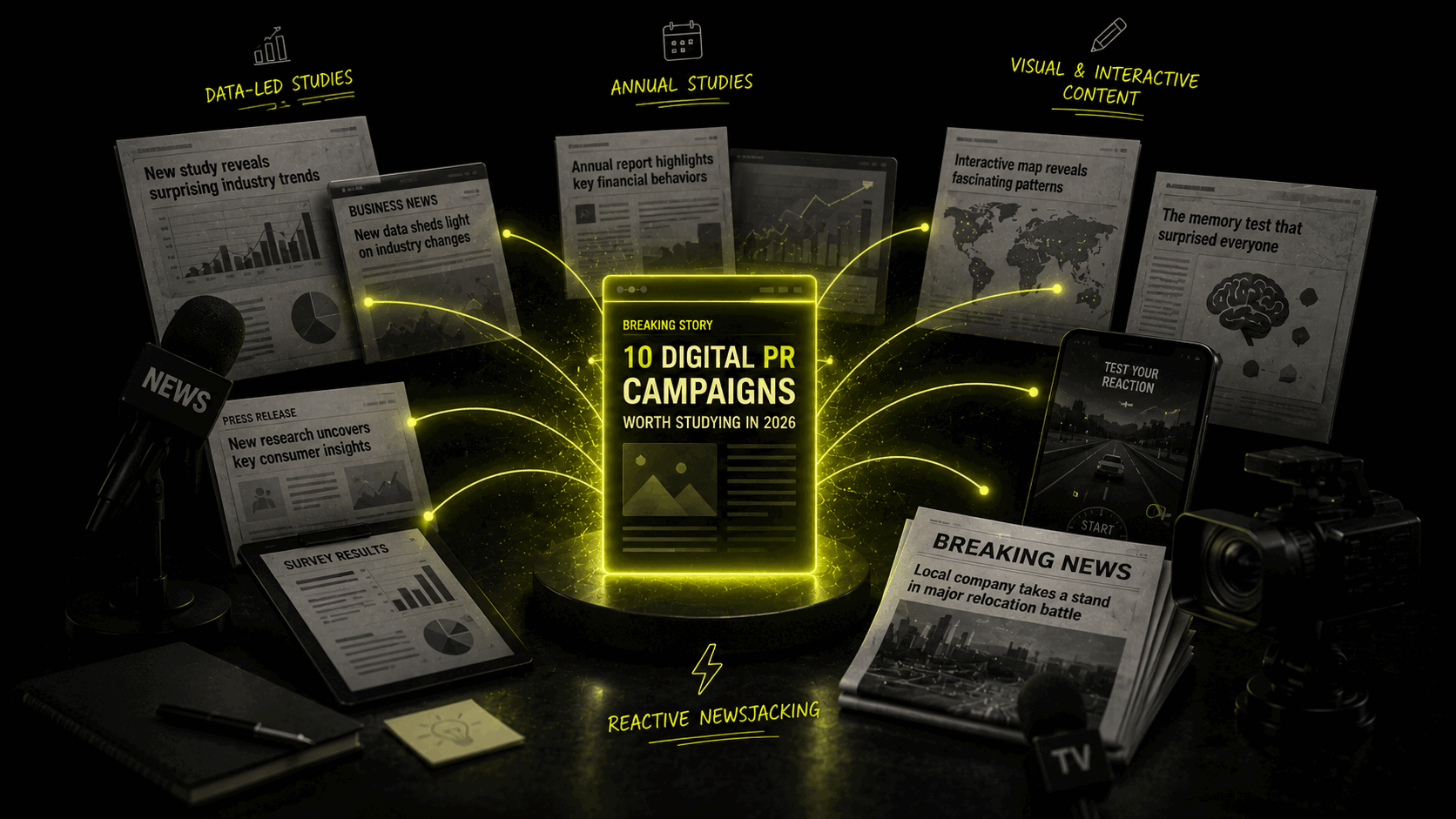
Most digital PR advice stays abstract — "create something newsworthy," "pitch a real angle." None of that means much until it's attached to an actual campaign, an actual outlet, and an actual link count. So here are ten, drawn from a wider roundup of real campaigns compiled by BuzzStream, grouped by the mechanism that made each one work.
Data-led studies
A data-led study turns something a brand already has — internal numbers, public records, a survey — into a number nobody's published yet, and that number is what a journalist actually cites.
HubSpot's proprietary marketing statistics roundup pulled in roughly 14,000 linking root domains from outlets including Inc.com, The Huffington Post, Entrepreneur, and CBS News — likely the largest single result in this list, built entirely from stats HubSpot already had internally. Insurance.com ran a most-ticketed-cars study using its own internal quote data and picked up 90-plus backlinks from Forbes, MSN, USA Today, and MotorTrend. Preply's study on subtitle-watching habits landed in the New York Times, the Wall Street Journal, and TimeOut, earning 800-plus backlinks from a single survey. None of these required a research budget most companies don't have — they required someone deciding the data already sitting in a spreadsheet was worth asking a question about, the same instinct behind turning a spreadsheet into a story journalists chase.
Recurring, annual studies
A study run once earns one wave of coverage. A study run every year on the same methodology earns a new wave every year, compounding rather than resetting.
Bankrate's Emergency Savings Report, published annually, has accumulated more than 8,000 cumulative backlinks — not from one big splash, but from journalists returning to cite the newest edition each year because the previous one already proved reliable. SurveyMonkey's monthly workforce survey with CNBC takes a smaller, steadier approach: 30 to 75 backlinks per monthly release, which adds up to more total coverage over a year than most one-off campaigns generate in their entire lifetime.
Why data wins so consistently: data-driven campaigns made up nearly 40% of digital PR coverage in one analysis of US media placements — twice the share earned by mapped or surveyed content types combined. Separately, 34% of SEOs now rank digital PR as their single best-performing link-building tactic, nearly double the 18% who say the same about guest posting.
Visual and interactive content
A visual or interactive piece works differently from a data study — it doesn't need a new number, it needs a format simple enough that anyone can participate in thirty seconds.
Signs.com's "Branded in Memory" project asked people to draw famous logos entirely from memory and published the surprisingly bad results — a format simple enough to explain in one sentence, which is exactly why it picked up 1,200-plus backlinks from outlets including the Daily Mail and the Houston Chronicle. JustPark built a reaction-time driving game as an interactive test and earned 1,300-plus backlinks from Daily Mail, Metro, and international sites. Neither required a research team. Both required someone recognizing that a genuinely fun thirty-second experience travels further than a well-designed infographic ever will.
Reactive newsjacking
Reactive campaigns don't manufacture the news — they attach a brand's specific expertise to a story that's already breaking, inside the narrow window before it stops being news.
HireAHelper's "WeWontMoveYouChargers" microsite, built around the San Diego Chargers' relocation controversy, turned a moving company's actual service into a protest stunt — and earned 45 backlinks from Fox, CBS, CNN, and USA Today, plus multiple TV segments, from a campaign that cost almost nothing to build compared to its coverage. That's the same fast-turnaround instinct behind the 24-hour window that decides who gets quoted — the story was already running; the brand just had a genuinely relevant reason to be in it.
"None of these campaigns needed a bigger budget than the idea deserved. They needed the idea, executed before the news cycle moved on."
What all ten actually have in common
Every campaign on this list gave a journalist something they couldn't have written without it — a number, a visual, an experience, or a genuinely relevant angle on a story already breaking. None of them asked for a link. The link showed up because the story was worth citing on its own, which is the entire mechanism a single earned placement actually runs on, whether it lands 45 links or 14,000.