What actually makes a journalist reply to your pitch.
Most pitches don't get rejected for bad writing. They get deleted because they land on the wrong desk, on the wrong day, with nothing inside worth quoting. Here's what the 2026 data says actually earns a reply — and five examples that would.
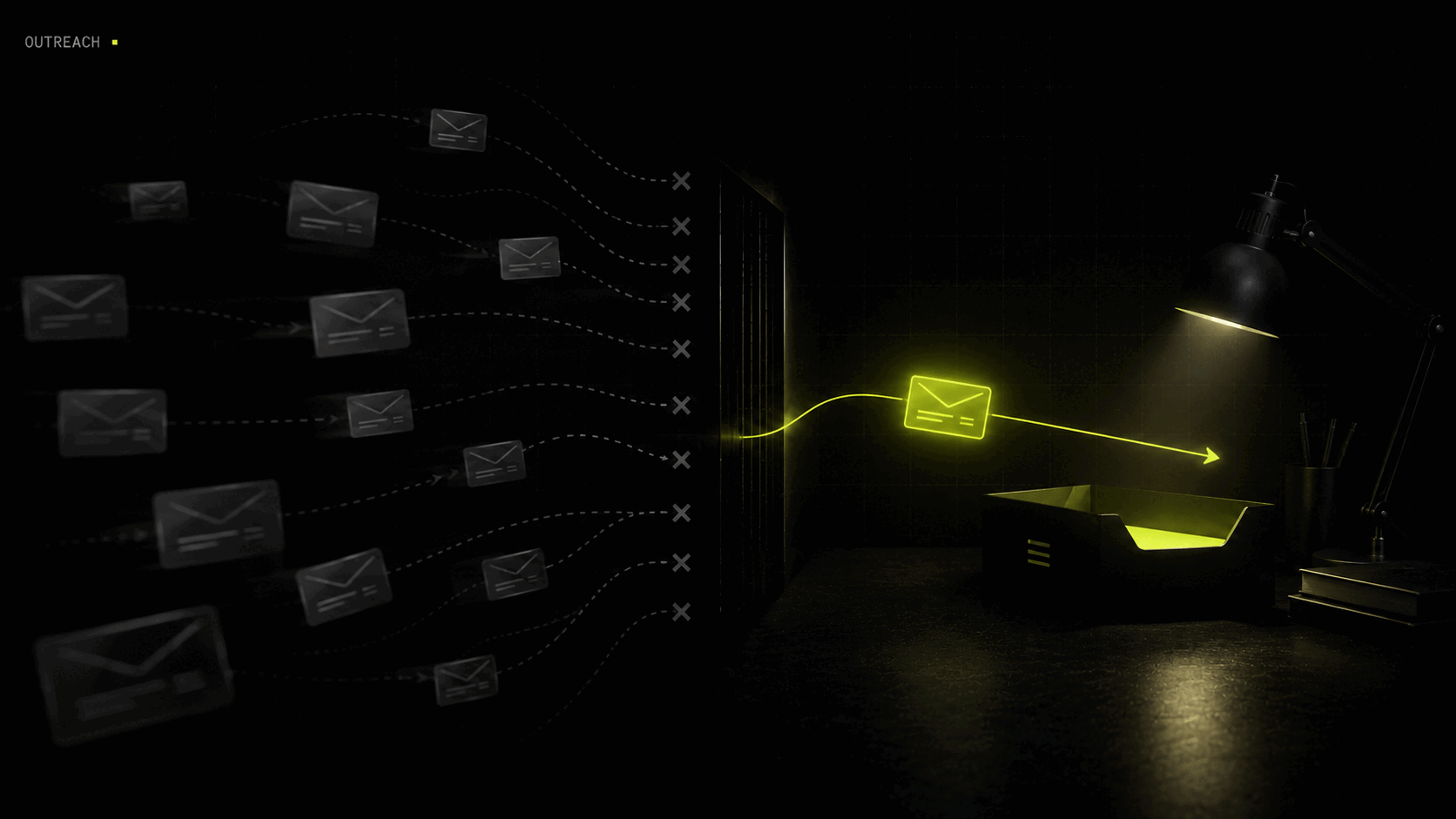
A journalist scrolls through fifty-some subject lines before finishing their coffee. Most get deleted unread. A handful get three seconds and a skim. One, maybe two, get a reply. Nothing about how well an email was written explains that gap. Something else does.
The short version: Muck Rack's 2026 State of Journalism report, drawn from more than a thousand working journalists, found that 88% disregard a pitch on sight if it doesn't match their beat, 71% reject anything that reads as overly promotional, and just 3% say the pitches reaching their inbox are consistently relevant to what they cover. And still, 86% of the stories they publish trace back to a PR pitch somewhere. Almost all of it is noise. The opportunity is in the rest.
Why most pitches die before the second sentence
A pitch lives or dies on relevance, decided in the time it takes to read a subject line and one sentence beneath it — not on the size of the story, and not on how polished the email is.
"Irrelevant" means something narrower than most senders assume. It doesn't mean wrong industry. It means this specific reporter hasn't covered this specific angle recently, or ever. The fix is unglamorous: pull the last ninety days of coverage on the topic and note every byline that shows up more than once. That list usually runs twenty to forty names, a fraction the size of the distribution lists most media databases sell, and worth more than all of them combined, because every name on it has already proven they write about this.
What a pitch actually needs to say
A pitch that gets read has four things in it and almost nothing else: which beat it fits, the actual news angle, one piece of evidence, and a single, specific ask — usually inside 150 to 200 words.
"We launched a product" isn't an angle; a reporter has no use for it. "We pulled data from 400 accounts and found a number nobody expected" is, because it hands them something to write, not just something to announce. That's the same logic behind pulling a real number out of a spreadsheet instead of a press release — a process we've written about separately.
How long should a media pitch actually be?
Most working guidance converges on the same range: a pitch body under 200 words, in paragraphs of two or three sentences, with the actual news in the first line rather than buried under three paragraphs of setup.
That's shorter than feels natural to write. A pitch that opens with one specific line about the reporter's last piece, states the angle, drops one proof point, and asks for one thing — a call, a quote, an embargoed briefing — fits that limit without cutting anything a reporter needed.
When's the best time to actually send it?
Tuesday through Thursday, mid-morning in the reporter's own time zone, beats every other slot by a wide margin. Mondays get spent clearing a weekend's backlog, and Fridays are already spoken for by whatever's due before the weekend.
Seasonal or calendar-tied stories need more runway than a same-week pitch — three to four months ahead for anything built around a date, since long-lead editorial calendars get locked well before an issue or segment airs. A pitch that feels timely to the sender is often already too late for the publication.
Five openers that would survive the inbox
None of this is theoretical. It's easier to see in five lines than in five rules.
A data pitch doesn't open with the company name. It opens with the number: "We pulled claims data from 40,000 policies and found the average payout takes 11 days longer than insurers publicly quote — happy to share the state-by-state breakdown."
A reactive pitch names the news first, not the brand. "Following this morning's announcement, happy to talk through what it means for small landlords specifically — I've advised on three similar situations this year." (There's more on this exact window, and why it closes fast, in our piece on reactive PR.)
An exclusive says so in the first sentence, with a real reason attached, not just flattery. "Giving you first look before this goes anywhere else — the angle fits your recent coverage of remote-work attrition better than anywhere else on our list."
A milestone pitch earns its place by attaching a number to context, not just an announcement. "We crossed 50,000 users this week. More relevant is what that says about churn in this category, which nobody's covered yet."
An expert-source pitch skips the biography. "On background: I can speak to the specific mechanism behind this, not just the general topic. Three sentences, on the record, if useful for what you're running today."
"A good pitch doesn't read like it could have gone to anyone. It reads like it could only have gone to the one person opening it."
How many times is it fair to follow up?
Once — sent three to five business days after the first email, restating the angle in a single new sentence rather than re-sending the original pitch, and then stopping regardless of whether a reply comes.
A second or third follow-up rarely changes the outcome. It just changes how the sender's name reads the next time it shows up. Reporters keep mental blocklists for exactly this reason, and a pitch that missed on relevance the first time doesn't improve by arriving three more times.
What actually changed about pitching in 2026
Journalists are now using AI in their own workflow at scale — Muck Rack puts overall adoption at 82%, up from 77% in 2024, with ChatGPT alone used by nearly half of those surveyed — which means a generic, keyword-stuffed pitch gets recognized and discarded faster than it would have two years ago, not slower.
The instinct that follows is usually the wrong one: writing pitches designed to dodge AI detection. The actual fix is writing pitches specific enough that they'd never need to dodge anything — a real number, a real name, a real reason this reporter in particular should care. That's harder to produce at scale, which is exactly why it still works.
None of this requires a bigger list or a cleverer subject line. It requires knowing, before anything gets sent, that the twenty names on it have actually written this story before. Everything else is just a matter of getting out of the way of that fact.