How to become the expert a journalist calls first.
66% of journalists now say PR is their top source for story ideas — ahead of social media, rival outlets, and industry events combined. Here's what actually earns a spot on that short list.
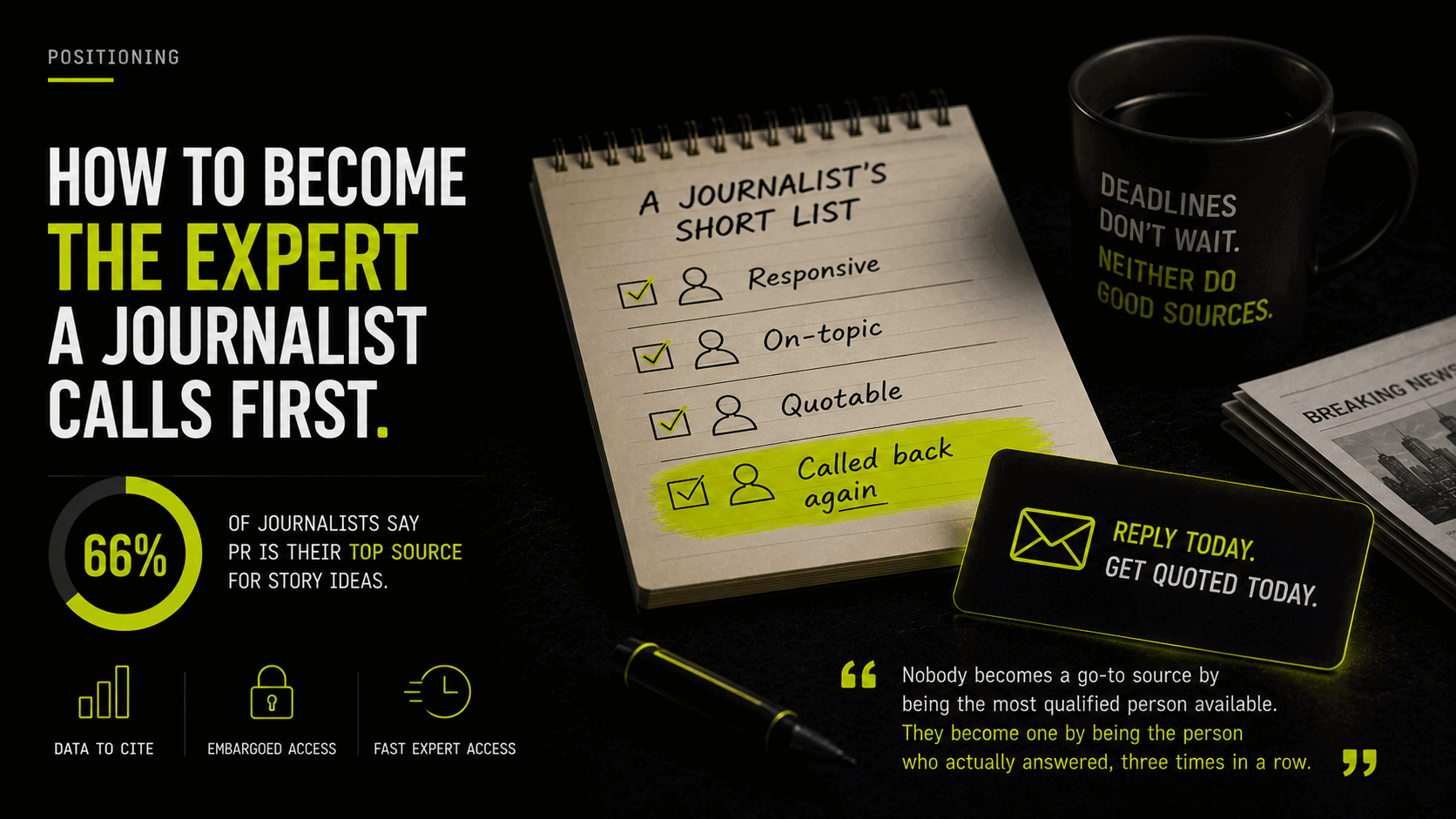
Every beat reporter has a short mental list of two or three people they call first when a story on their topic breaks. Everyone else on their contact list gets an email that may or may not get opened. The difference between those two positions has almost nothing to do with expertise, and almost everything to do with what happened the last three times that reporter reached out.
What do journalists actually want from a source right now?
Journalists facing shrinking newsroom resources increasingly rely on PR to supply exactly three things: data they can cite, embargoed access to a story before anyone else has it, and fast access to an expert who can speak with authority the moment a story is breaking.
None of those three are about credentials in the abstract sense. A journalist doesn't need the most decorated expert in a field — they need the one who will actually answer, on deadline, with something quotable.
The number that reframes this whole topic: 66% of journalists say PR-provided content — pitches, media kits, expert access — is now their top source of story ideas, ahead of social media, rival publications, and industry events. PR isn't competing with those channels anymore. For most working journalists, it's already winning.
How fast do you actually need to respond to be useful?
Fast enough that the reporter never has to wait to find out whether you'll answer — readiness and accessibility, not credentials, are what separates a source a journalist calls back from one they quietly stop trying.
That's a narrower bar than it sounds, and also a stricter one: it means being reachable in the hours a story is actually being written, not the days after it publishes. A journalist working the 24-hour window that decides who gets quoted doesn't have time to chase down someone who might reply tomorrow. They move to whoever answers today.
What makes one expert get called back and another get forgotten?
Consistency across small, low-stakes moments does more than one impressive introduction — an expert who replies promptly, on-topic, and quotably to three unremarkable requests earns a reporter's trust faster than someone who makes a spectacular first impression and then goes quiet.
97% of reporters still prefer email as their primary contact channel over any other method, which means the entire relationship usually lives in a format that's easy to be forgettable in. Standing out there isn't about a clever subject line. It's about being the reply that actually answered the question asked, in language a reporter could use directly, without three follow-up emails clarifying what was meant.
Does this actually mean building a media list from scratch?
Not from scratch — it means treating the handful of reporters who already cover a given beat as a short, specific list worth knowing individually, rather than a category of people to reach via a mass pitch.
The mechanics are the same ones that make any pitch worth reading work in the first place: knowing exactly who covers this exact angle, and being the name they already associate with a fast, useful answer the last time they needed one. A media list built that way is short. It's also the only kind that actually gets opened.
"Nobody becomes a go-to source by being the most qualified person available. They become one by being the person who actually answered, three times in a row."
The reporters covering any given beat aren't looking for a bigger rolodex. They already have one, and most of the names in it never call back. The opening isn't in reaching more journalists — it's in being reliably useful to the small number who are already looking.