ChatGPT and Perplexity are sending real traffic now: the 2026 referral data.
AI referral traffic stopped being a rounding error somewhere in the last year. Here's what the actual 2026 numbers show about where it comes from, and why the quality of a citation matters more than which engine sent it.
AI referral traffic used to be small enough that most analytics dashboards buried it under "Other." That stopped being true sometime in the last year — the volume is real now, and so is the shift in exactly where it's coming from.
How is the AI referral market actually split right now?
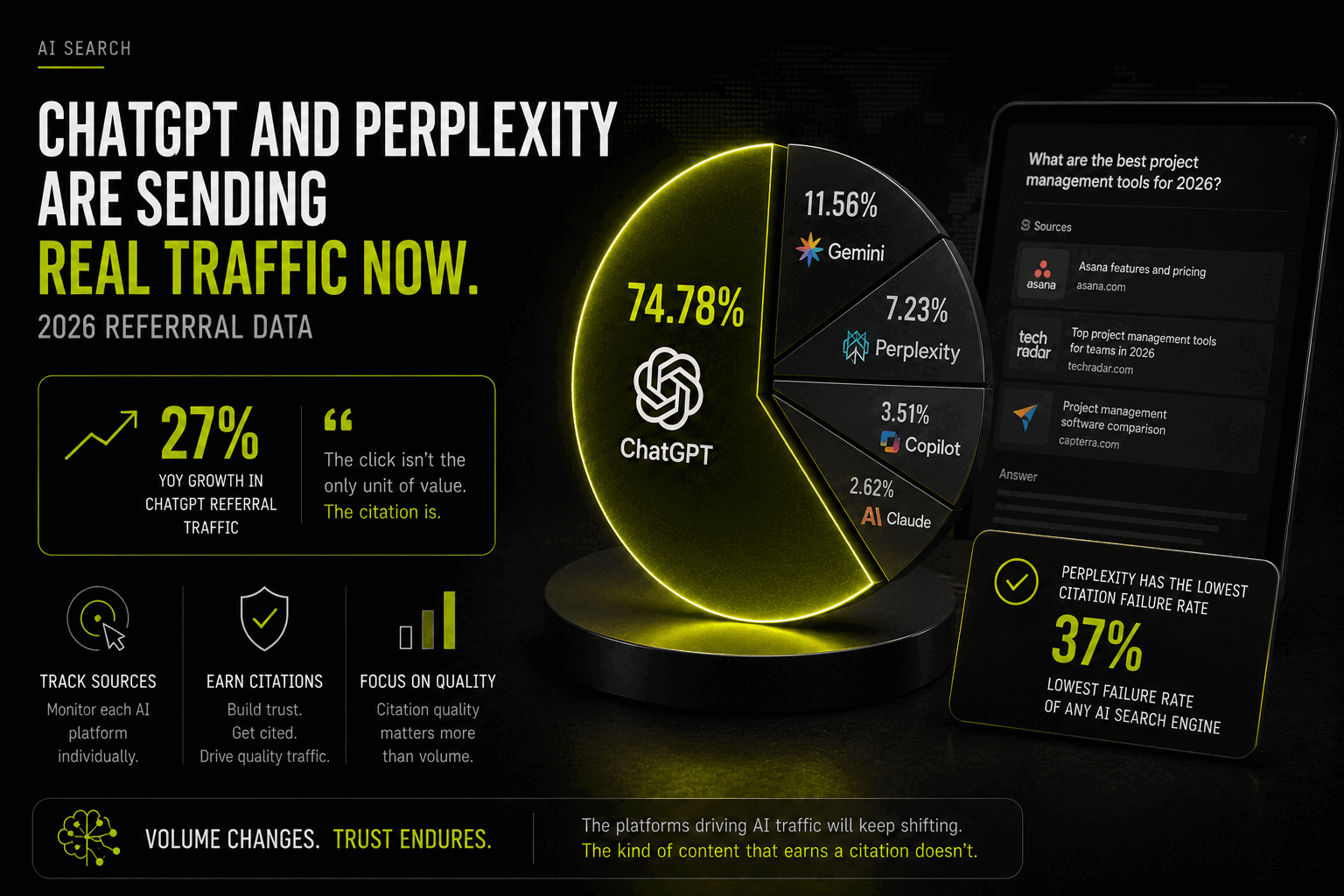
ChatGPT still sends the clear majority of AI referral traffic — around 74.78% by one 2026 measurement — but that share has actually fallen from roughly 79.74% in 2025, even as ChatGPT's own referral volume grew 27% year over year.
Both things are true at once: ChatGPT is sending more traffic than it ever has, and losing relative share, because the rest of the AI search market is growing even faster. Gemini currently sits around 11.56%, Perplexity around 7.23%, Copilot 3.51%, and Claude 2.62% by that same measurement — though other studies measuring differently put ChatGPT's share as high as 92%, which is worth flagging on its own.
Why the numbers disagree so much: different studies use different definitions of "AI referral" — some count only direct click-throughs from a chat interface, others include broader assistant integrations. Treat any single percentage as directional, not exact, and watch the trend more than the specific figure.
Is Perplexity actually losing relevance?
Its overall traffic share is shrinking — its US share of AI traffic fell from about 11.42% in 2025 to 6.85% in 2026 — but its referral quality is going the opposite direction, with the lowest citation failure rate of any AI search engine tested, at roughly 37%.
That gap matters more than the headline share number. Perplexity built its entire product around inline citations by default, positioning itself as a research tool rather than a general assistant — and that design choice is showing up directly in referral quality even as its raw volume plateaus against faster-growing competitors.
Why does citation quality matter more than which engine sends the click?
A visit driven by a citation-first tool like Perplexity tends to arrive already primed with context about why the source was cited, which is a fundamentally different kind of visitor than one who clicked a chat link with less framing around it — volume and value aren't the same measurement.
This connects directly to the pattern already covered in the 2026 zero-click data: the click is no longer the only unit of value in AI-driven search. Being cited accurately, by a tool whose users trust its citations, can matter more than raw referral volume from a platform where the click happened almost incidentally.
What should a business actually do with this data?
Track AI referral sources in analytics the same way search engines are tracked individually, rather than lumping every AI assistant into one "AI traffic" bucket — the sources behave differently enough now that treating them as one channel hides more than it reveals.
Beyond measurement, the underlying lever is the same one covered in why AI recommends some brands and ignores others: getting cited by any of these tools runs on the same trust signals, regardless of which one happens to be growing fastest this quarter. Chasing the platform with this year's biggest growth number is less useful than building the kind of citable, independently-verified content every one of them is already drawing from.
"The platform sending the most clicks this year won't necessarily be the one sending them next year. The kind of content that earns a citation doesn't change nearly as often."
The market share numbers will keep shifting, probably every quarter for a while. What's stayed constant across all of them is which kind of source gets cited in the first place — specific, verifiable, independently reported. That's the part worth building toward, regardless of which chatbot happens to be winning this particular measurement period.